
Quick Answer
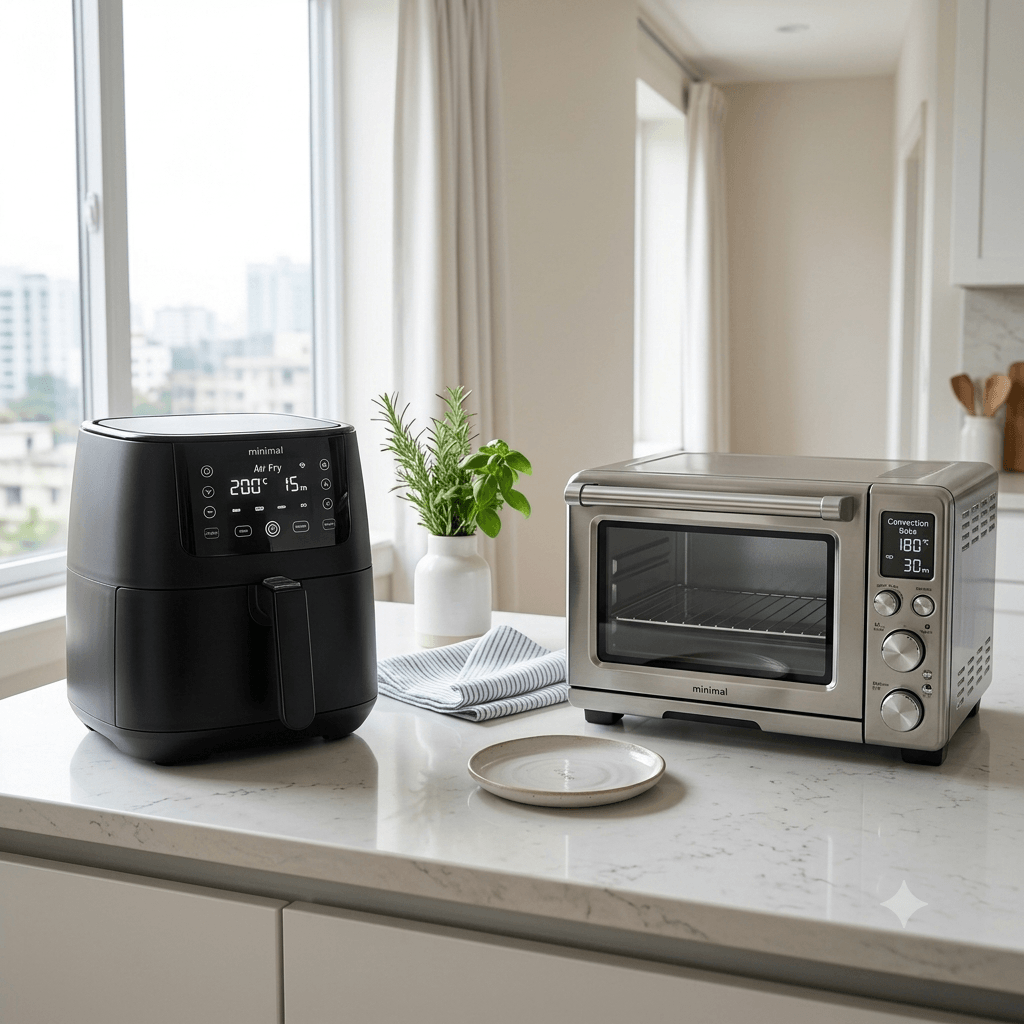
When comparing a smart air fryer vs convection oven, the main difference lies in airflow speed, preheating time, and cooking capacity.
A smart air fryer is the better choice for quick, everyday meals, small batches, and countertop convenience, while a convection oven wins for larger families, batch cooking, and baking that requires more even, consistent heat across a bigger capacity. Most home cooks are best served by having both, but if you can only choose one, your household size and cooking habits should decide.
How They Actually Work
Understanding the core technology behind a smart air fryer vs convection oven will help you decide which unit fits your daily cooking style best.
Both appliances rely on the same core principle — a fan circulating hot air to cook food faster and more evenly than standard static heat. The difference is in execution: air fryers use a smaller, sealed chamber with a high-speed fan positioned close to the food, which creates the crisping effect. Convection ovens use the same fan-forced principle but in a much larger cavity, prioritizing even heat distribution over surface crisping.
Head-to-Head Comparison
| Factor | Smart Air Fryer | Convection Oven |
|---|---|---|
| Cooking Speed | Faster for small portions | Faster for large batches |
| Capacity | 3–8 quarts (1–2 people) | Full oven size (family meals) |
| Crispiness | Excellent, closer to frying | Good, but less intense |
| Energy Use | Lower for small meals | More efficient for large batches |
| Preheat Time | 2–5 minutes | 8–12 minutes |
| Counter Space | Takes up counter space | Built-in or standalone, no counter space used |
| Best For | Fries, wings, reheating, small proteins | Roasting, baking, sheet-pan meals, multiple dishes at once |
| Price Range | $60–$250 | $150–$1,500+ (built-in models higher) |
Where the Smart Air Fryer Wins
1. Speed for Small Portions For one or two servings, an air fryer preheats and cooks significantly faster than a full-size oven, since there’s less internal volume to heat.
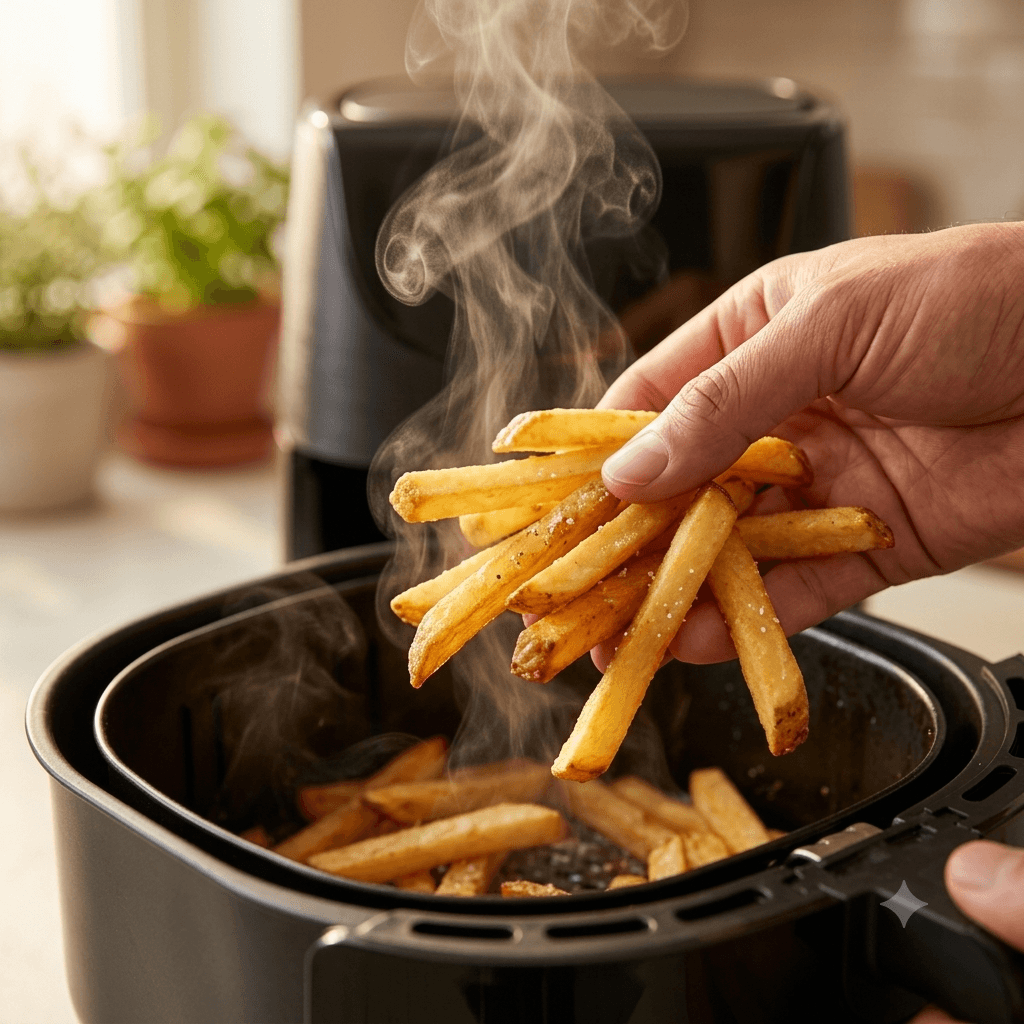
2. Superior Crisping The tighter cooking chamber and closer proximity to the heating element give air fryers a genuine edge for anything you want extra-crispy — fries, wings, and reheated leftovers in particular.
3. Lower Energy Cost for Small Meals Heating a small chamber for 15–20 minutes uses meaningfully less electricity than running a full oven for the same task.
4. Smart Features Many current-generation air fryers include app connectivity, preset programs, and voice assistant integration — features not yet common in most convection ovens.
Where the Convection Oven Wins
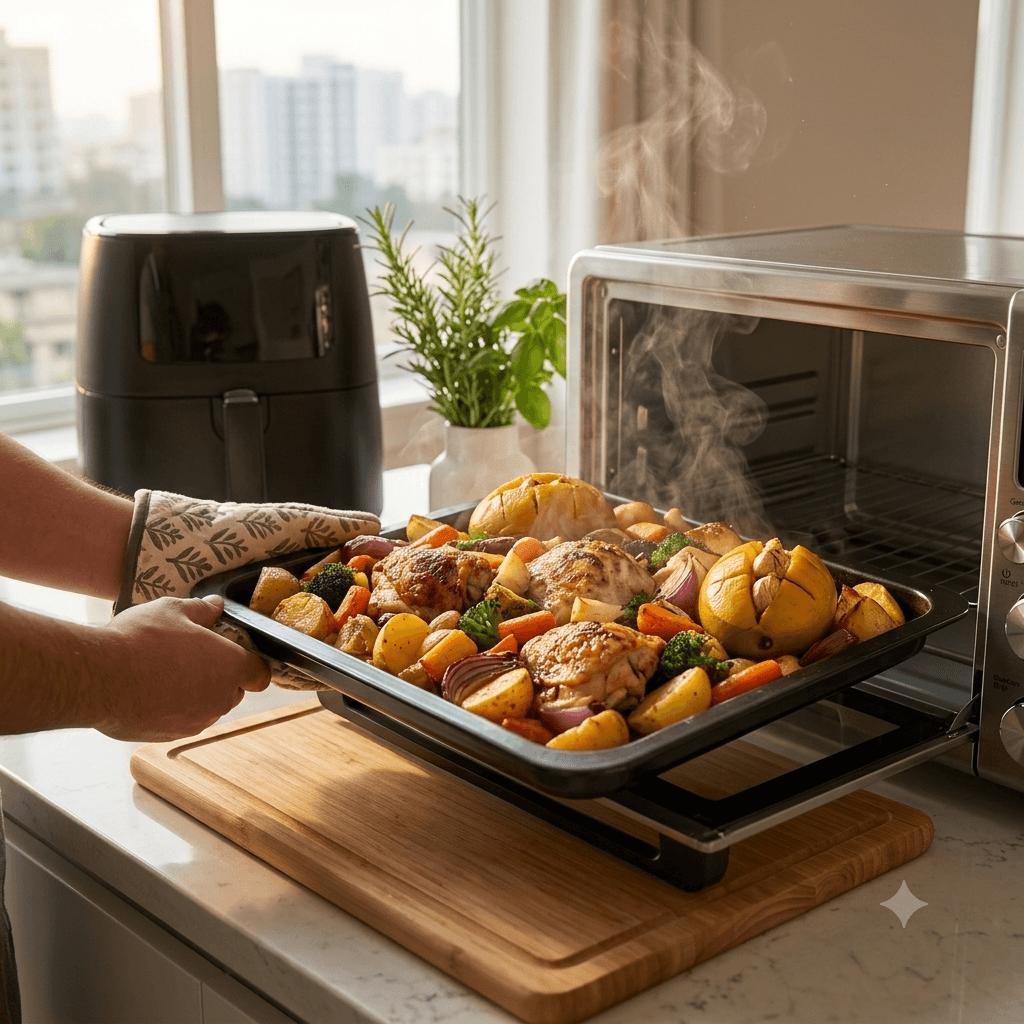
1. Capacity for Families A full-size convection oven can cook a complete meal — protein, vegetables, and a side — on multiple racks simultaneously, something no countertop air fryer can match.
2. More Even, Consistent Heat The larger internal volume and typically more powerful heating elements produce more consistent results across large or thick items, like a whole chicken or a full tray of roasted vegetables.
3. Better for Baking Cakes, bread, and other baked goods generally perform better in a convection oven’s more stable, evenly distributed heat environment than in the more turbulent airflow of a compact air fryer.
4. No Counter Space Required Built-in convection ovens free up valuable counter space, which matters most in smaller kitchens already crowded with appliances.
Which One Should You Buy?
Choose a smart air fryer if you:
- Cook mainly for 1–2 people
- Want fast, crispy results for everyday meals
- Have limited kitchen space and want a versatile countertop appliance
- Reheat leftovers frequently
Choose a convection oven if you:
- Regularly cook for a family or larger household
- Bake often
- Want to cook multiple dishes at once
- Prefer not to add another countertop appliance
Most practical answer: if your budget and kitchen space allow it, using both together covers nearly every cooking scenario — the air fryer for quick, crispy small meals, and the convection oven for larger family cooking and baking.
FAQ
1. Is a smart air fryer just a small convection oven?
Functionally, yes — both use fan-forced hot air. The air fryer’s smaller chamber and closer heating element are what create its signature crispiness advantage.
2. Which uses less electricity?
For small portions, the air fryer is more energy-efficient since it heats a much smaller space. For large batches, a convection oven becomes more efficient per item cooked, since you’re not running multiple air fryer batches back to back.
3. Can a convection oven make food as crispy as an air fryer?
It can get close, especially with a wire rack setup that maximizes airflow around the food, but it typically won’t match an air fryer’s crisping speed and intensity in a single, compact chamber.
4. Do I need both, or is one enough?
It depends on household size. A single person or couple can often get by with just an air fryer. Families cooking larger meals regularly will find a convection oven more practical as the primary appliance, with an air fryer as a fast secondary option.
5. Which is easier to clean?
Air fryer baskets are generally easier to clean since they’re smaller and often dishwasher-safe. Convection ovens have a larger interior that takes more time and effort to clean thoroughly.
6. Are smart air fryers worth the extra cost over basic models?
If you’ll actually use the app connectivity and presets, yes. If you just want a simple, reliable air fryer, a basic non-smart model often performs identically for a lower price.
7. Which is safer for a small kitchen?
Both are safe when used correctly, but an air fryer’s compact, enclosed chamber makes it slightly more forgiving of tight counter spaces, since there’s no oven door swinging open and no risk of a large hot surface being exposed.
8. Can I convert a regular oven recipe for an air fryer?
Generally yes, but reduce the temperature by about 25°F (about 15°C) and check for doneness earlier, since air fryers cook faster and more intensely than standard ovens.
Conclusion
The smart air fryer vs convection oven decision ultimately comes down to how many people you cook for and what you cook most often. Air fryers win on speed, crispiness, and convenience for small households; convection ovens win on capacity and consistency for families and baking. For most kitchens, the two appliances complement each other rather than compete.
Recommended Products
- Ninja Foodi 6-in-1 Smart XL Air Fryer: A well-rounded smart air fryer option featured in this comparison, with app connectivity and dual-zone cooking.
- COSORI Countertop Convection Oven: A compact countertop convection oven for households that want family-sized capacity without a full built-in unit.
Affiliate Disclosure: This article may contain affiliate links. If you purchase through one of these links, Smart Kitchen Vibe may earn a small commission at no additional cost to you.
Recommended Guides
- 5 Best Air Fryer Accessories Every Modern Cook Needs (2026)
- Is the Ninja AF101 Air Fryer Still Worth It in 2026?
- How to Clean an Air Fryer Basket Without Damaging It
References
- U.S. Department of Energy: Convection Oven Energy Efficiency Guidelines
- Manufacturer specifications (Ninja, Cosori)
Editorial Note
Reviewed by the Smart Kitchen Vibe Editorial Team
This comparison draws on manufacturer wattage, capacity, and preheat-time specifications for popular air fryer models (Ninja, Cosori, Instant) versus standard countertop and built-in convection ovens, focused on the real-world cooking-time and energy-use differences that matter most for everyday household decisions.