Coffee Maker Not Brewing Hot Enough? 7 Causes & Easy Fixes

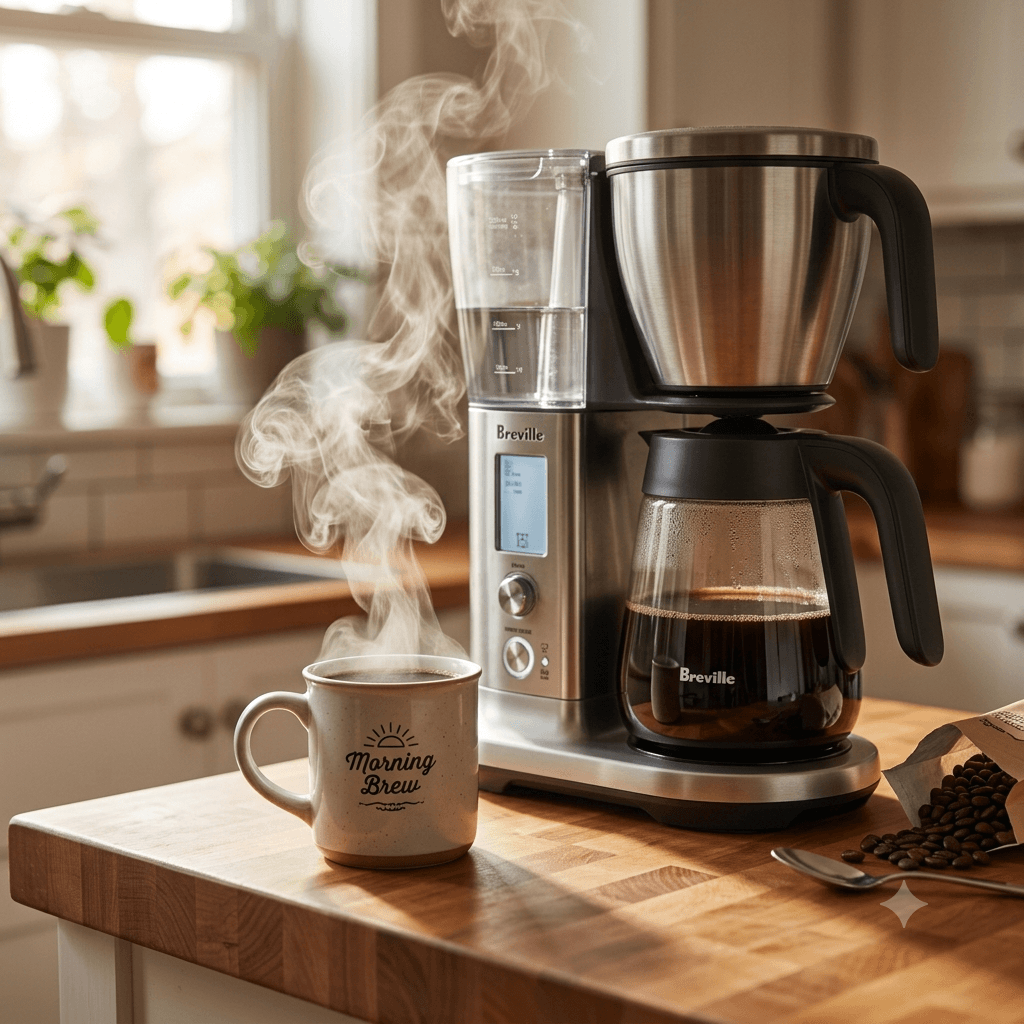
If you are dealing with a coffee maker not brewing hot enough, the most common causes are mineral scale buildup, clogged water paths, or a failing thermostat.
Quick steps to try first:
- Turn off the machine.
- Check the water reservoir and filter basket for buildup or blockages.
- Descale the machine.
- Brew again and check the temperature.
- If coffee is still lukewarm after descaling, the heating system or thermostat may be the issue.
Is Your Coffee Maker Actually Brewing Too Cold?
Before assuming your machine is broken, it’s worth ruling out a few things that have nothing to do with the appliance itself:
- The cup itself was cold when the coffee was poured
- The brewed coffee sat in the carafe for a while before you drank it
- A thermal carafe wasn’t preheated before brewing
- Your specific coffee maker’s design brews at a temperature that’s simply cooler than you’re used to from another machine
Before assuming your machine is broken: try preheating your cup or carafe with hot water for a minute before brewing, and drink the coffee soon after the cycle finishes. If it’s still noticeably lukewarm under these conditions, move on to the causes below.
7 Common Causes of a Coffee Maker Not Brewing Hot Enough
1. Mineral or Limescale Buildup
Hard water minerals that accumulate inside the heating system can insulate the heating element, making it harder for the machine to properly heat water even though it’s still functioning.
2. Dirty or Clogged Water Path
Mineral deposits or coffee residue inside the internal water tubes can restrict flow, and reduced flow often means the water spends less time in contact with the heating element, resulting in cooler coffee.
3. Coffee Maker Needs Descaling
This is really a follow-on from the first two causes, but it’s worth calling out separately: if you can’t remember the last time you descaled your machine, this is very likely at least part of the problem. See our full guide on how to descale a coffee maker properly for the complete process.
4. Incorrect Temperature or Brewing Setting
Many modern coffee makers include adjustable temperature or brew-strength settings. If yours was accidentally changed or a new model defaults to a lower setting his alone can explain consistently cooler coffee.
5. Heating Element Is Weak or Failing
If the machine’s heating system isn’t working at full capacity, water may not reach the proper brewing temperature even with a completely clean water path.
6. Faulty Thermostat or Temperature Sensor
If the thermostat or temperature sensor misreads the water temperature, it can cause the heating cycle to shut off earlier than it should, leaving the water and your coffee cooler than intended.
7. Cold Carafe or Cup
Even a perfectly functioning machine can produce coffee that feels lukewarm quickly if it’s poured into a cold cup or left sitting in a carafe that wasn’t preheated. This isn’t a machine failure, but it’s one of the most common reasons people believe their coffee maker is broken.
How to Fix a Coffee Maker That Isn’t Brewing Hot Enough
If your coffee maker not brewing hot enough persists, preheating your carafe can help immediately.
Fix 1: Descale the Coffee Maker
- Empty the water reservoir.
- Use a manufacturer-approved descaling solution.
- Run a brew cycle following your manufacturer’s instructions.
- Run several fresh-water rinse cycles afterward.
- Brew a fresh pot and check the temperature.
For the complete walkthrough, see our guide: How to Descale a Coffee Maker Properly.
Fix 2: Clean the Water Path and Filter Basket
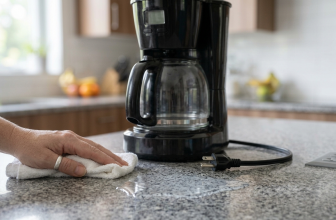
Remove and wash the filter basket with warm, soapy water, and run a water-only cycle to flush out any loosened residue from the internal tubing.
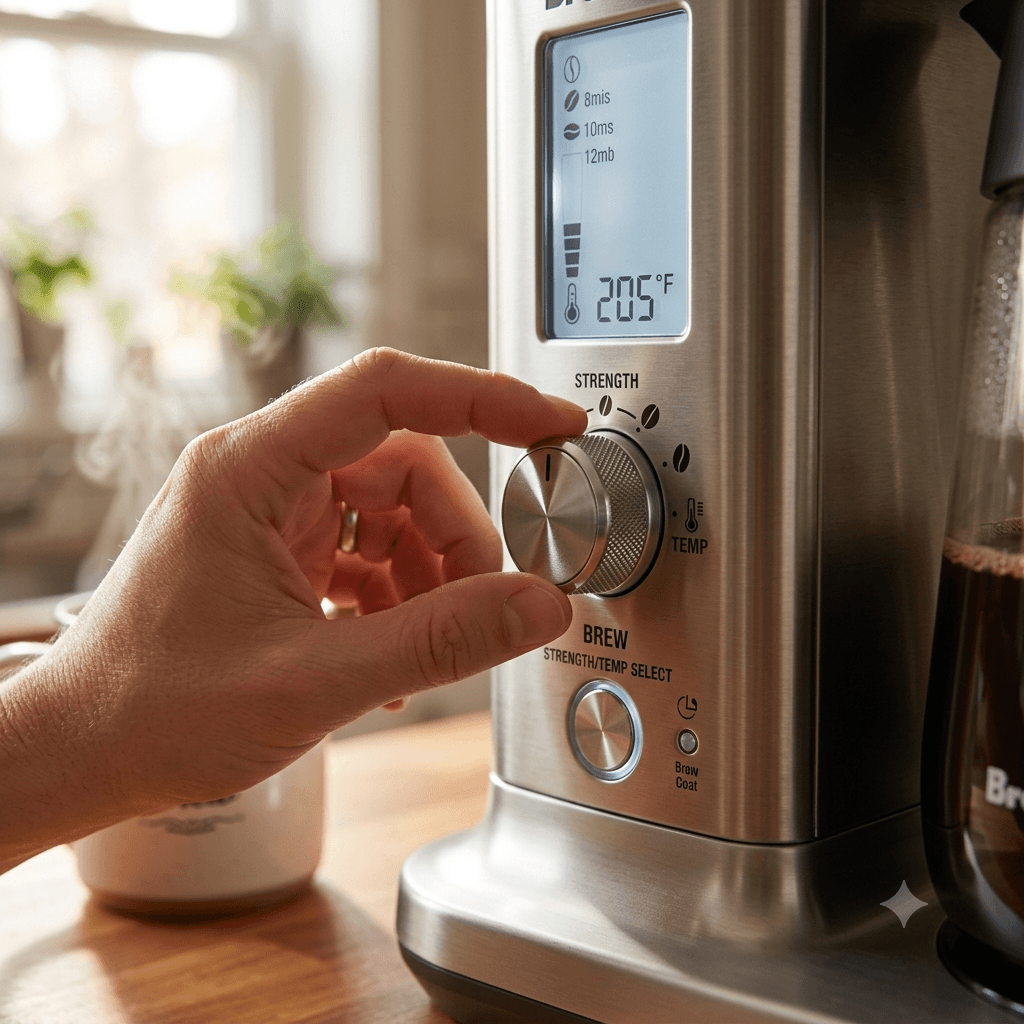
Fix 3: Check and Reset Your Temperature Settings
If your machine has adjustable brew temperature or strength settings, confirm they’re set to the manufacturer’s default or your preferred higher setting, and consult your manual if you’re not sure how to check this.
Fix 4: Preheat Your Cup or Carafe
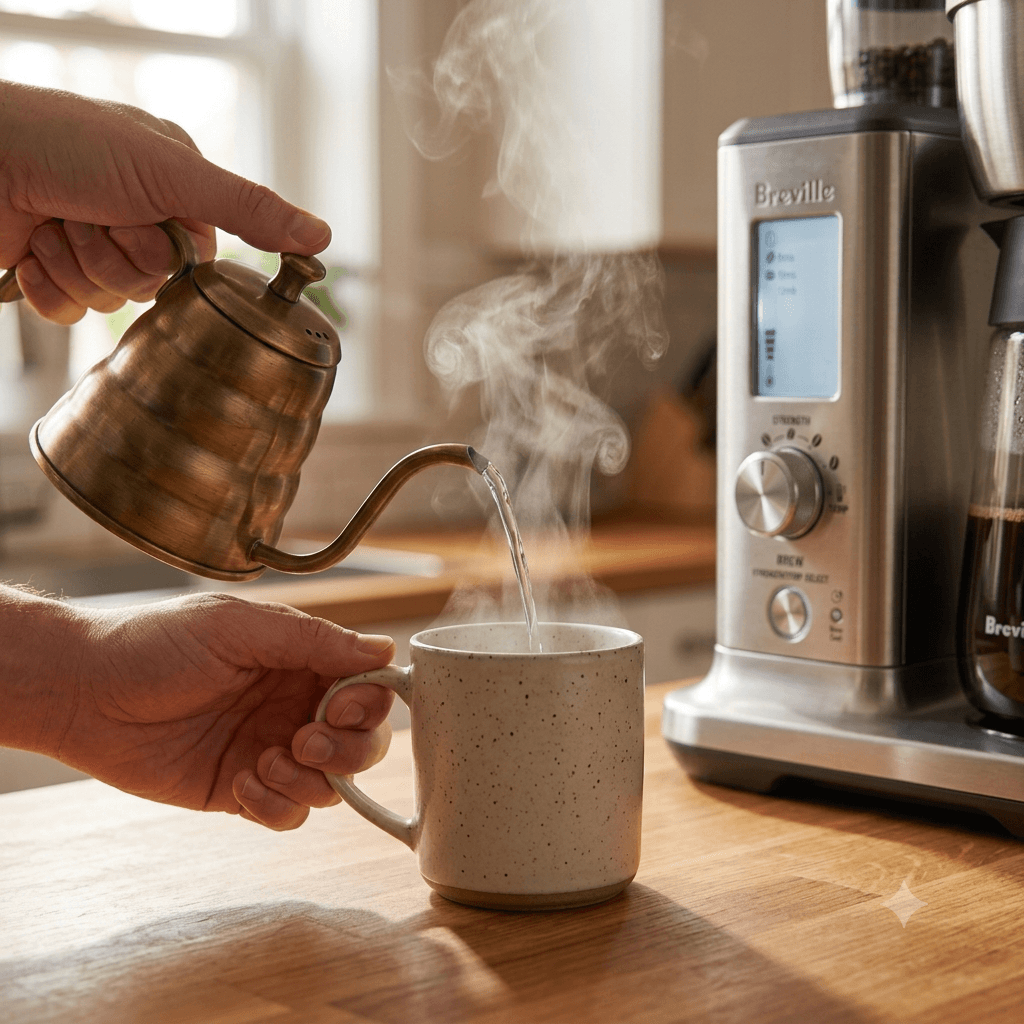
Rinse your cup or carafe with hot water for about a minute before brewing; this simple step alone often makes a noticeable difference in how hot the coffee feels once poured.
Fix 5: Contact Support for Heating Element or Thermostat Issues
If descaling, cleaning, and adjusting settings don’t resolve the problem, the heating element or thermostat itself may be failing. This isn’t a DIY electrical repair. Contact your manufacturer’s support team.
Troubleshooting Table
| Symptom | Likely Cause | What to Do |
|---|---|---|
| Coffee is lukewarm | Heating problem or heavy scale | Descale machine |
| Water heats slowly | Mineral buildup | Run descaling cycle |
| Coffee starts hot but cools quickly | Cold cup/carafe | Preheat container |
| The machine runs, but water barely flows | Clogged water path | Clean/descale |
| Still cold after descaling | Heating element/thermostat | Professional service |
| Different temperature every time | Sensor/thermostat issue | Check manufacturer support |
How Hot Should Coffee Be When Brewed?
“If you suspect your coffee maker not brewing hot enough, it helps to know the exact ideal brewing temperatures according to coffee experts.”

Ideal brewing temperature varies somewhat by manufacturer and machine type, so it’s worth checking your specific model’s documentation rather than assuming a single fixed number applies universally. As a general guide, most drip coffee makers are designed to brew in a range that extracts flavor properly without scalding the grounds. Noticeably outside that range in either direction (too cool or too hot) can affect both taste and how hot the final cup feels. If your coffee consistently tastes weak or sour in addition to being lukewarm, that combination often points more strongly toward a heating problem than toward a cold cup or carafe.
How to Make Your Coffee Stay Hot Longer
“Preventing a coffee maker not brewing hot enough relies heavily on keeping your cups and thermal carafes preheated before serving.”
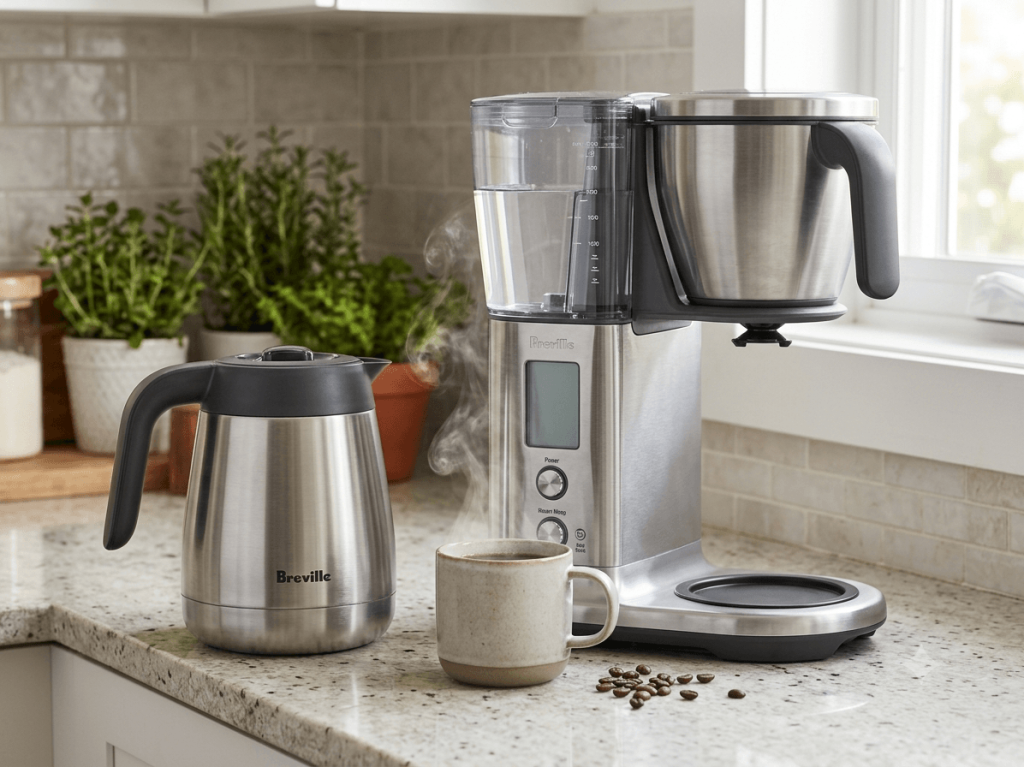
Even a perfectly functioning coffee maker can produce coffee that cools faster than you’d like. A few habits help:
- Preheat your cup or carafe with hot water before brewing
- Use a thermal (vacuum-insulated) carafe instead of a glass carafe on a warming plate, which loses heat once the plate turns off
- Don’t leave coffee sitting on the warming plate for hours; extended warming can actually degrade flavor rather than just keeping it hot
- Avoid pouring a large batch into small cups repeatedly; each pour exposes more surface area to cool air
- Add cold milk or creamer last, right before drinking, rather than letting it sit and cool the coffee further
A quality insulated travel mug or thermal carafe is one of the simplest upgrades if this is a recurring issue even with a healthy machine.
When Is It a Heating Element Problem?
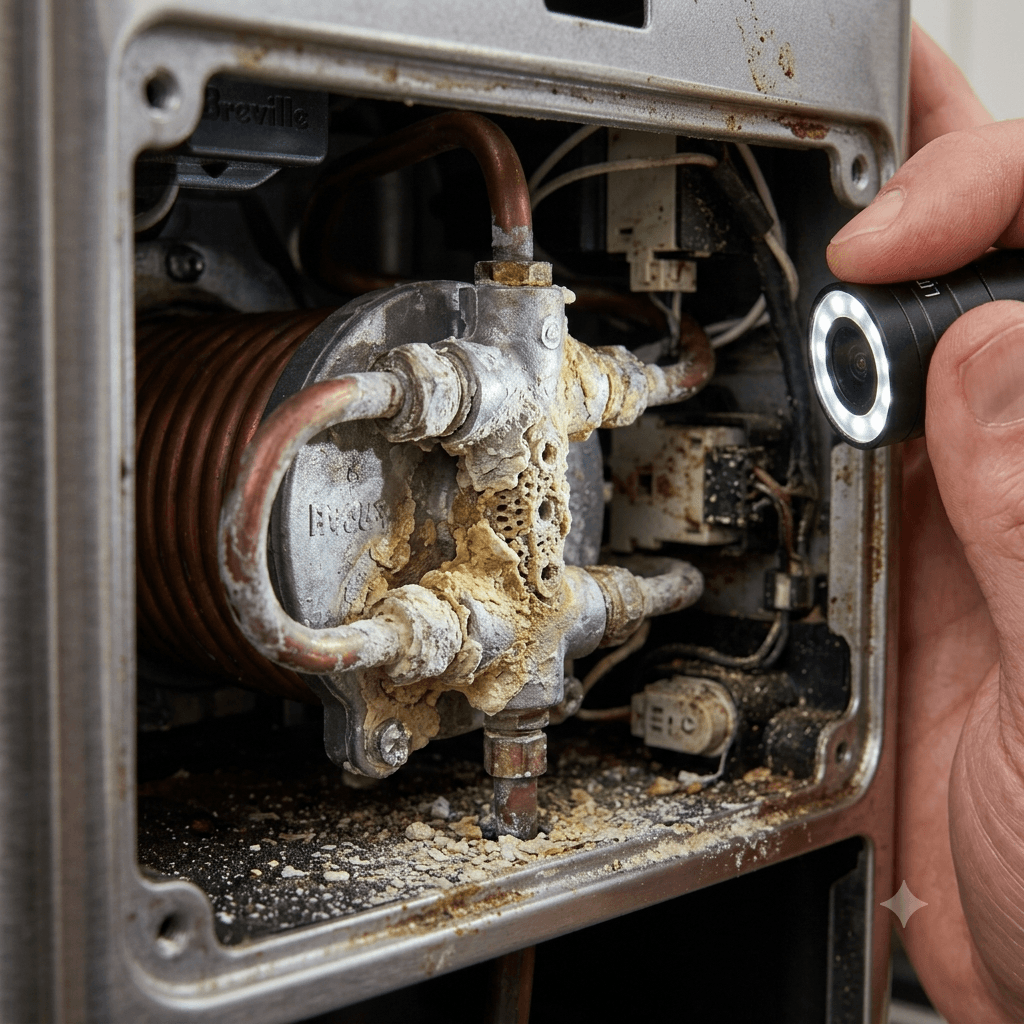
Consider a heating element or thermostat issue specifically when:
- The machine consistently produces lukewarm coffee
- The problem persists even after descaling
- Water flow is otherwise normal
- The brew cycle completes in the normal amount of time
- But coffee temperature stays consistently low regardless of what you try
Do not open the coffee maker and attempt to repair electrical components yourself unless you’re specifically qualified to do so. Contact the manufacturer’s support team instead.
When Should You Replace the Coffee Maker?
Not every case calls for a new machine — most temperature problems are resolved by descaling, cleaning, or a settings adjustment. Consider replacement if:
- The heating system repeatedly fails even after professional service
- Repair costs approach or exceed the price of a comparable new machine
- The machine is quite old and replacement parts are hard to find
- You’re dealing with heating problems alongside leaks or other mechanical issues at the same time
If you’re at this stage, it may be worth comparing newer models with adjustable brewing temperatures and better-insulated thermal carafes rather than replacing like-for-like.
How to Prevent Your Coffee Maker From Brewing Cold Coffee
- Descale the machine on a regular schedule
- Keep the filter and water reservoir clean
- Use the water type recommended by your manufacturer (filtered water, where advised)
- Clean the brew basket regularly, not just when it looks visibly dirty
- Run a cleaning cycle if the machine has sat unused for an extended period
- Follow your model’s recommended maintenance schedule rather than guessing
Frequently Asked Questions
01: Why is my coffee maker not brewing hot enough all of a sudden?
The most common causes are mineral buildup, a clogged water path, incorrect temperature settings, a weakening heating element, or a faulty thermostat. Start with descaling and cleaning before assuming a hardware failure.
02: Why is my coffee maker making lukewarm coffee?
This is usually either a heating-related issue inside the machine (scale buildup or a failing heating element) or simply a cold cup or carafe absorbing heat quickly after brewing. Rule out the cup/carafe explanation first, since it’s the easiest to test.
03: Can a dirty coffee maker make coffee colder?
Yes. Mineral scale and residue inside the water path and heating system reduce how efficiently the machine can heat water, which can result in noticeably cooler coffee even with an otherwise functioning machine.
04: Does descaling make coffee hotter?
Often, yes; if scale buildup was insulating the heating element or restricting water flow, removing it frequently restores normal brewing temperatures.
05: How often should I descale my coffee maker?
This depends on your water hardness and usage, but many manufacturers recommend descaling roughly every 1–3 months. See our full descaling guide for a more detailed schedule.
06: Can hard water affect coffee temperature?
Yes. Hard water contains more dissolved minerals, which accelerates scale buildup on the heating element and can reduce heating efficiency faster than with soft or filtered water.
07: Why does my coffee cool down so quickly?
This is usually unrelated to the machine itself—a cold cup, a non-insulated carafe, or coffee left sitting on a warming plate for too long are the most common culprits.
08: Should I replace my coffee maker if it doesn’t get hot?
Not immediately. Try descaling, cleaning, and checking your settings first these resolve the majority of cases. Replacement is worth considering only if the heating problem persists after proper maintenance and professional service.
Final Thoughts
“Dealing with a coffee maker not brewing hot enough doesn’t mean you need a new appliance immediately.”
A coffee maker that isn’t brewing hot enough doesn’t automatically mean the heating element has failed. Start with the simplest, safest steps: descaling, cleaning the water path, checking your temperature settings, and preheating your cup or carafe before assuming you need a repair or replacement. If the problem persists after proper maintenance, it’s time to involve the manufacturer’s support team rather than attempting an electrical repair yourself.
Fixing a coffee maker not brewing hot enough usually comes down to simple descaling and proper maintenance.
Related Coffee Maker Articles:
How to Descale a Coffee Maker Properly: Complete Step-by-Step Guide
Why Is My Coffee Maker Not Turning On? 7 Causes & Easy Fixes
Why Is My Coffee Maker Brewing Slowly? 7 Causes & Easy Fixes
Why Is My Coffee Maker Leaking Water? 7 Causes & Easy Fixes
Recommended Products to Keep Your Coffee Hotter
If descaling and cleaning don’t fully solve the problem or you just want your coffee to stay hot longer after brewing, these are worth considering:
- Manufacturer-Approved Descaling Solution — the fastest way to restore a heating element that’s insulated by mineral scale
- Vacuum-Insulated Thermal Carafe — holds heat far longer than a glass carafe sitting on a warming plate
- Instant-Read Kitchen Thermometer — useful for confirming your coffee’s actual temperature before assuming the machine is at fault
- Insulated Travel Mug — keeps individual cups hot much longer than a standard ceramic mug
Affiliate Disclosure: This article may contain affiliate links. If you purchase through one of these links, Smart Kitchen Vibe may earn a small commission at no additional cost to you. We only recommend products we believe offer genuine value to our readers.
Editorial Note
Reviewed by the Smart Kitchen Vibe Editorial Team
Smart Kitchen Vibe publishes practical, thoroughly researched kitchen appliance guides based on manufacturer documentation, real-world testing, and safety guidelines. Where manufacturer documentation doesn’t confirm a specific mechanical cause, this guide uses cautious, evidence-based language (“may,” “can,” “possible cause”) rather than presenting an unverified diagnosis as certain.