
How to Clean a Cuckoo Rice Cooker: The Ultimate Step-by-Step Guide (2026)

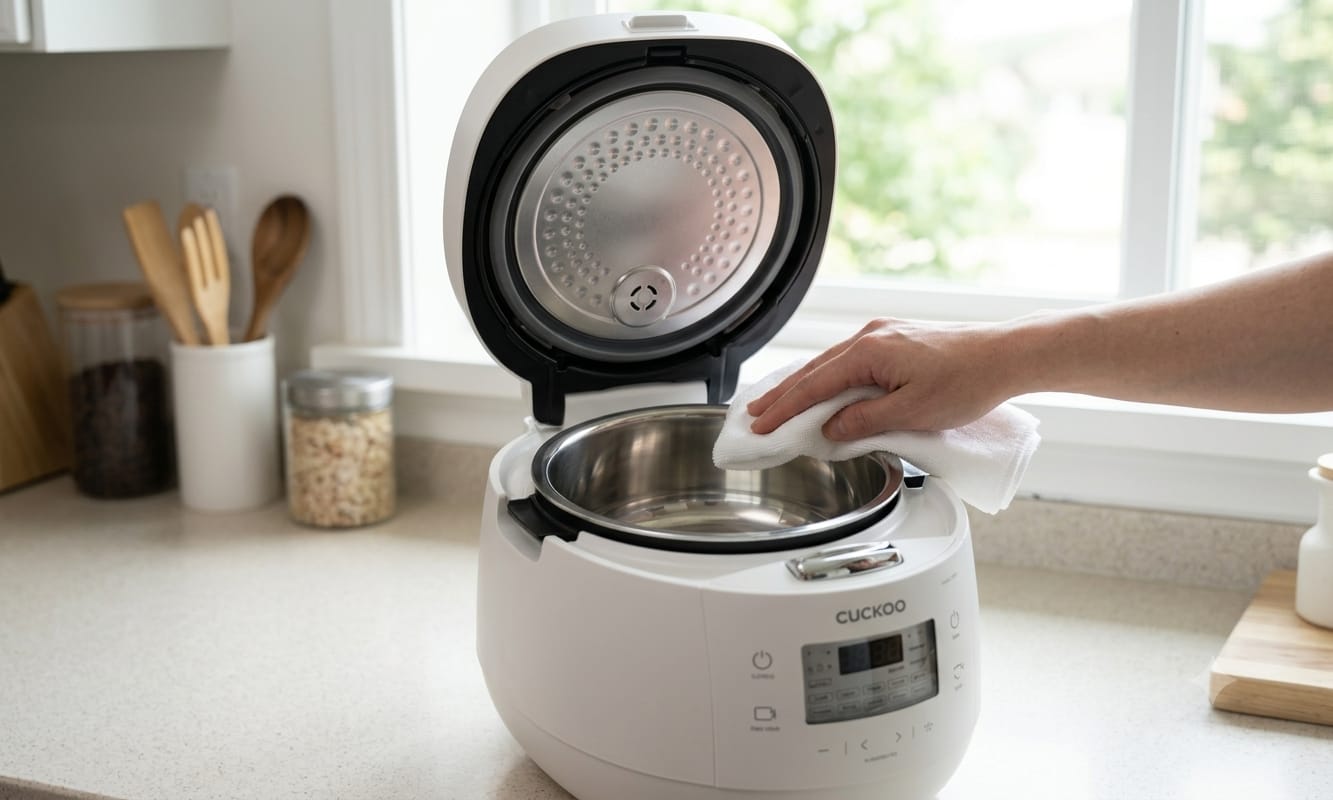
Cuckoo rice cookers are premium, high-tech appliances that deliver perfectly fluffy grains every time, thanks to their advanced pressure systems and smart sensors. But because these machines rely on high pressure and steam, starch residue, moisture, and condensation can build up quickly inside the lid, valves, and base. Knowing how to clean a cuckoo rice cooker properly after every use is essential to prevent mold, eliminate bad odors, and maintain peak pressure performance for years to come.
If you don’t clean your appliance regularly, this buildup can clog the internal sensors, cause lingering odors, or even trigger frustrating error codes like E_t or Eco. Knowing how to clean a cuckoo rice cooker properly is the best way to prevent these technical issues and extend its lifespan.
In this complete guide on how to clean a cuckoo rice cooker, we’ll walk you through every single part — the inner pot, steam vent, pressure valve, thermal sensor, and dew collector — so you can keep your cooker running like new without damaging its non-stick coating or internal electronics.
Quick Checklist: What You’ll Need to Clean Your Cuckoo Rice Cooker
Before you start, gather these simple kitchen tools:
- Warm water and mild dish soap
- A soft nylon sponge or microfiber cloth (no steel wool or abrasive scrubbers!)
- Baking soda (for stubborn odors)
- A toothpick or the cleaning pin (usually stored underneath the cooker base)
Step-by-Step Guide: How to Clean Every Part of Your Cuckoo Rice Cooker
1. Wash the Inner Pot and Detachable Lid Cover
Always let the appliance cool down completely before removing any internal parts—this prevents warping and protects the coating.
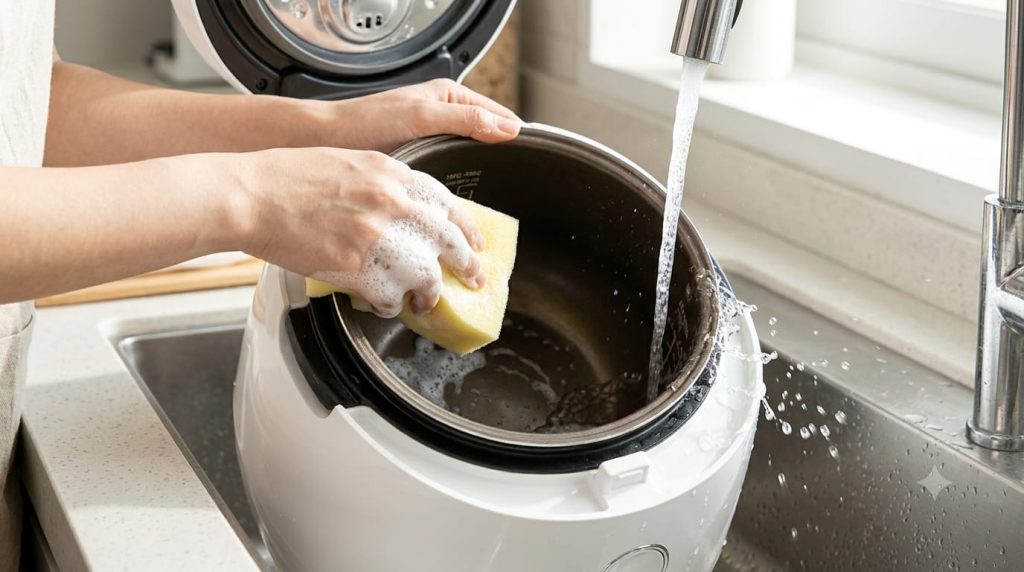
- The Inner Pot: Remove the pot and wash it gently with a soft sponge and mild dish soap. Never use abrasive scrubbers, as they will scratch the delicate non-stick Teflon or ceramic coating.
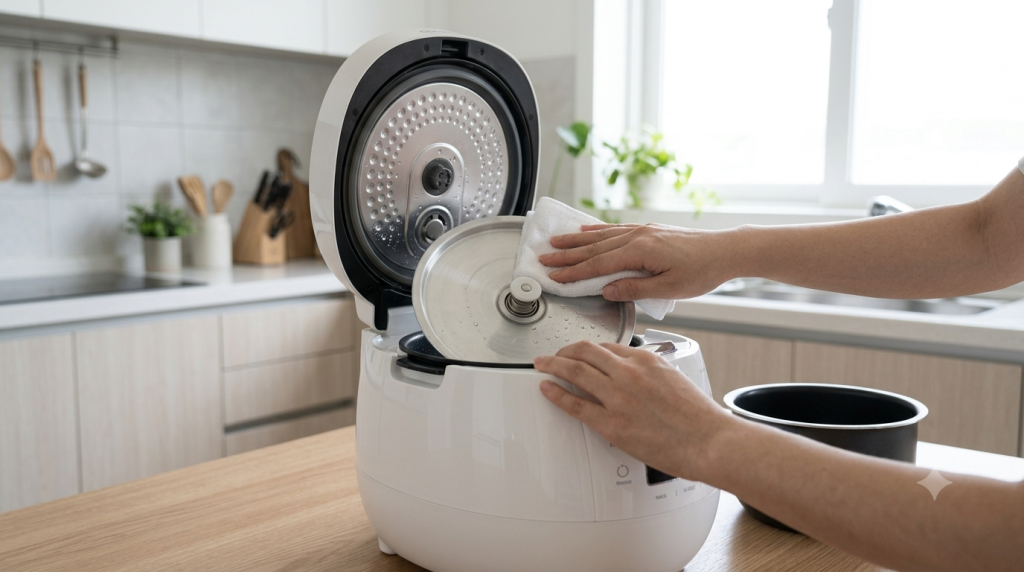
- The Detachable Clean Cover: Most modern Cuckoo models have a button on the inner lid that releases the stainless steel cover plate. Pull it out, remove the rubber packing gasket, wash both in warm soapy water, and dry thoroughly before snapping them back into place.
2. Clean the Steam Vent and Pressure Valve
The pressure weight and steam cap are where starchy water tends to collect during cooking. Left uncleaned, this residue can breed bacteria and block proper steam release. Understanding how to clean a Cuckoo rice cooker steam valve is essential for maintaining proper pressure.
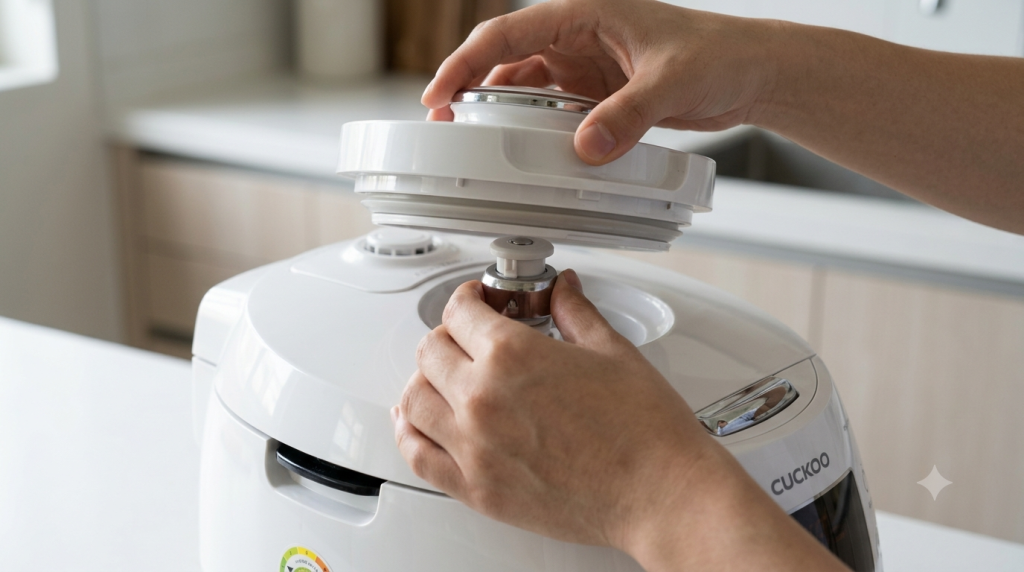
- Steam Cap: Pull the plastic steam cap on top of the lid straight upward to remove it, then wipe the area beneath it clean.
- Pressure Valve (The Weight): Turn the pressure weight counterclockwise and lift it off. Check underneath the cooker for the metal cleaning pin (fastened to the bottom of the unit) and push it through the small steam nozzle to clear out any trapped rice starch.
3. Wipe the Center Thermal Sensor and Heating Plate
If your rice keeps burning at the bottom, a dirty internal base is usually the culprit. Learning how to clean a cuckoo rice cooker sensor plate will fix uneven heating instantly.
- Remove the inner pot and look inside the empty base.
- Use a slightly damp microfiber cloth to wipe the large metal heating plate.
- Pay close attention to the round, spring-loaded thermal sensor at the center. Make sure it moves freely up and down when pressed.
4. Empty and Clean the Dew Collector
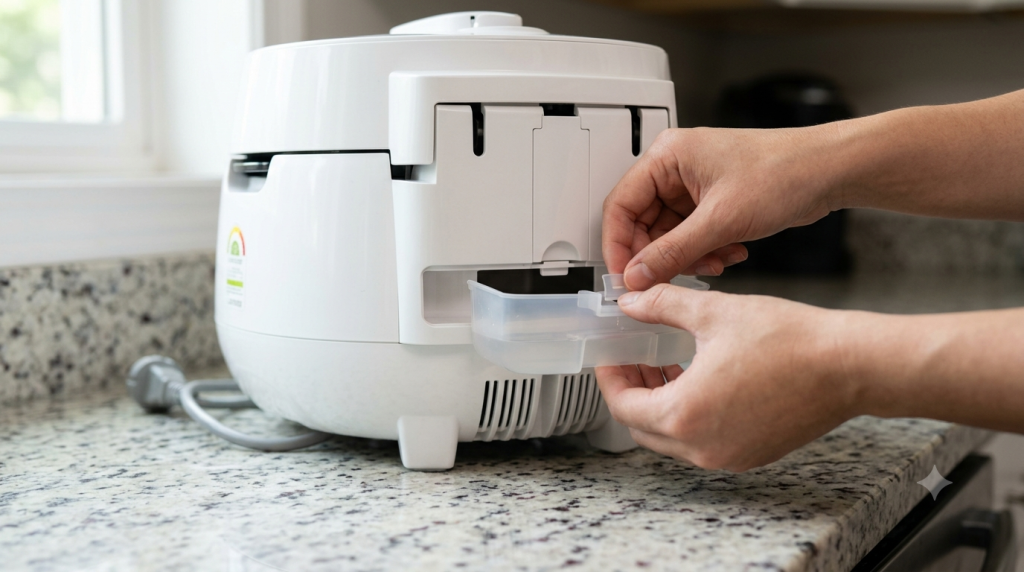
On the back of your Cuckoo rice cooker, you’ll find a small plastic cup called the dew collector. It catches condensation that runs down whenever you open the lid.
- Unsnap the cup, discard the stale water, wash it with dish soap, and click it back into place.
💡 Pro Tip: Skipping the dew collector is the #1 cause of a smelly rice cooker—don’t forget this small but important step!
How to Remove Stubborn Odors: Auto-Steam Cleaning Hack
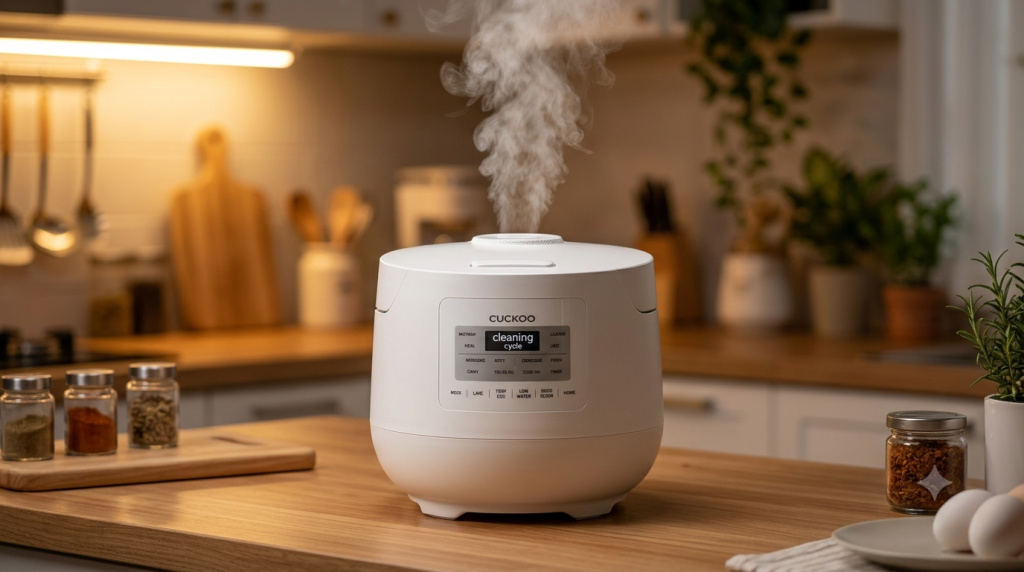
If your cooker smells like old rice or spices, use Cuckoo’s built-in self-cleaning trick to freshen it up fast:
- Fill the inner pot with water up to scale line 2 for white rice.
- Add 1 tablespoon of white vinegar or lemon juice.
- Close the lid and lock the handle; select Auto Clean (or Preset/Mode, depending on your model), then press Cook.
- Let the machine steam-clean its internal valves for about 20 minutes, then wipe it dry.
Frequently Asked Questions About Cleaning a Cuckoo Rice Cooker
01: Are Cuckoo rice cooker parts dishwasher safe?
No. It’s best to hand-wash the inner pot, detachable cover, and rubber gaskets. The high heat and harsh detergents used in dishwashers can strip the non-stick coating and degrade the silicone seals over time.
02: How often should I deep clean my Cuckoo rice cooker?
Wash the inner pot and detachable inner lid after every single use. The steam vent, nozzle pin, and dew collector should be checked and cleaned at least once a week to keep your cooker performing at its best.
03: Why does my Cuckoo rice cooker smell bad even after washing the pot?
A lingering smell usually means the dew collector or steam vent still has trapped moisture or starch. Run the auto-steam cleaning cycle above, and double-check the dew collector cup for stale water.
04: What does the E_t or Eco error code mean on my Cuckoo rice cooker?
These codes often point to a blocked sensor or steam pathway caused by built-up residue. Knowing how to clean a cuckoo rice cooker thoroughly, especially the thermal sensor and steam vent (Steps 2–3 above), usually resolves the issue.
05: Can I use vinegar every time I clean my Cuckoo rice cooker?
You can use the vinegar steam-clean cycle every 1–2 weeks for regular maintenance, but avoid doing it after every single use. Frequent vinegar cleaning isn’t necessary and can be replaced with a simple wipe-down for most days, saving the deep steam clean for when odors or residue actually build up.
06: Will cleaning my Cuckoo rice cooker fix the E01 or E02 error code?
Not always. E01 and E02 codes usually point to a heating or pressure sensor issue rather than a cleaning problem — cleaning helps mainly with E_t and Eco codes, which relate to blocked steam pathways. If cleaning doesn’t resolve E01/E02, check our full Cuckoo error code guide for the specific fix.
07: Can I clean the rubber packing gasket with soap, or will it damage it?
Mild dish soap and warm water are safe for the rubber packing gasket. Avoid using alcohol-based cleaners or abrasive scrubbers on it, since these can dry out or tear the rubber over time, leading to steam leaks during pressure cooking.
08: Is it normal for the inner pot’s non-stick coating to look duller over time even with proper cleaning?
Yes, slight dulling is normal after months of regular use, even with correct cleaning habits. However, if you notice flaking, peeling, or deep scratches (not just dullness), it’s time to replace the inner pot rather than continue using it, since damaged non-stick coating can affect cooking performance.
🛒 Recommended Cuckoo Rice Cooker Accessories
- CUCKOO Replacement Inner Pot (CR-0810F / compatible models) — for when your non-stick coating starts to wear; check the compatibility chart for your exact model before ordering
- XANGNIER Rice Cooker Cleaning Brush Kit — reaches tight spots around the steam vent and sealing rings, compatible with most rice cooker brands
Affiliate Disclosure: This article may contain affiliate links. If you purchase through one of these links, Smart Kitchen Vibe may earn a small commission at no additional cost to you.
Recommended Guides
- Cuckoo Rice Cooker Water Ratio Guide: 5 Easy Tips
- Cuckoo Rice Cooker Error Codes? (Easy Fix For E01, Eco, & More)
- Why Does My Rice Cooker Burn the Bottom? (5 Proven Fixes)
Editorial Note
Reviewed by the Smart Kitchen Vibe Editorial Team
Cuckoo’s non-stick inner pot and pressure-sealing lid require different care than basic rice cookers — this guide reflects Cuckoo’s official cleaning instructions to avoid damaging the non-stick coating.





[…] 🧼 How to Clean a Cuckoo Rice Cooker: The Ultimate Step-by-Step Guide […]
[…] Who Should Buy It: Households that want dependable, restaurant-quality rice without paying premium prices. If you already own one, see our guide on how to clean a Cuckoo rice cooker. […]